For the better part of the nearly six years Donald Trump has been president, the stock market has thrived. The average annual return of the Dow Jones Industrial Average ( ^DJI +0.19% ) , S&P 500 ( ^GSPC +0.28% ) , and Nasdaq Composite ( ^IXIC +0.27% ) under Trump is higher than under most other presidents over the last 130 years. While the artificial intelligence (AI) infrastructure build-out and Trump's Tax Cuts and Jobs Act, which permanently lowered the peak marginal corporate income tax rate from 35% to 21%, have been well-received by Wall Street, not all of Trump's policies are viewed favorably by investors.
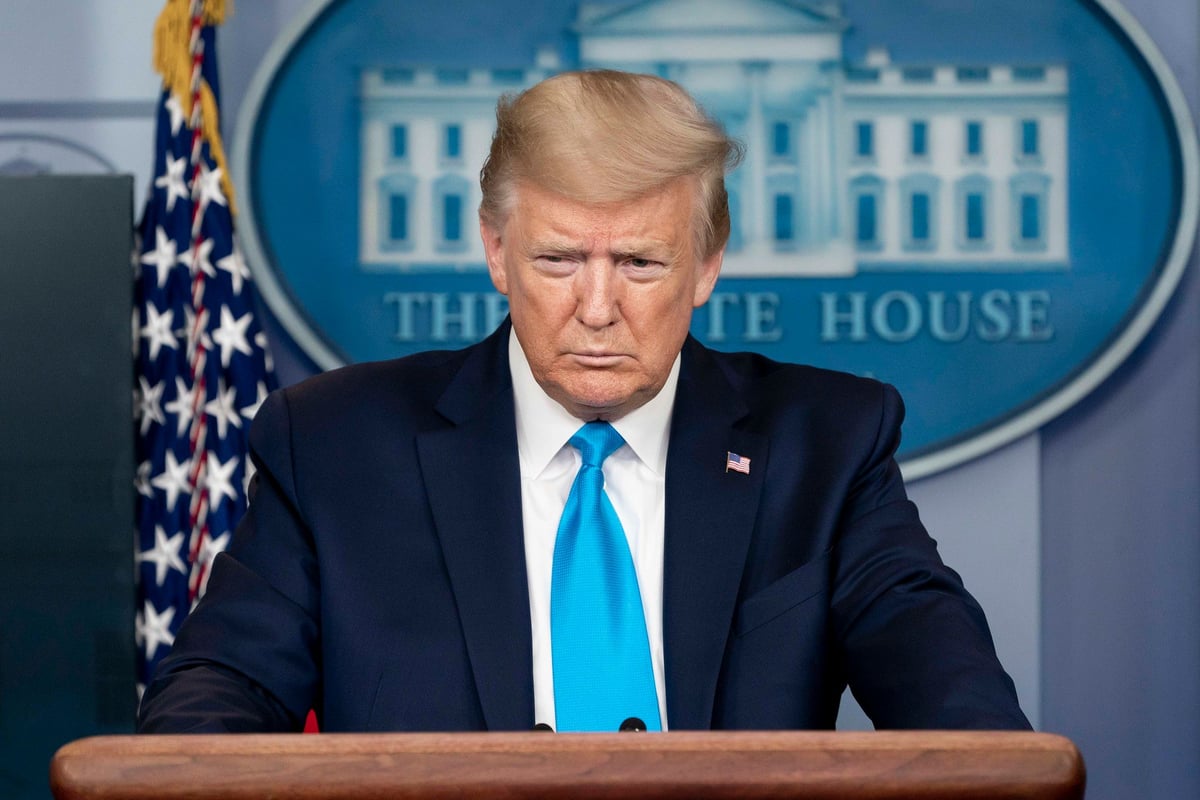
President Trump's policies are directly influencing consumer prices. Image source: Official White House Photo by Andrea Hanks, courtesy of the National Archives. There's arguably no bigger headwind for the stock market than elevated inflation -- and no catalyst behind above-average inflation that's more prominent than President Trump's policies.
Although headline inflation has retraced from its May 2026 high, a new forecast suggests that Trumpflation is evolving and worsening . Two of President Trump's policies have lit a fire under consumer prices A modest level of inflation (rising prices) is expected when the U.S. economy is expanding. But with the Consumer Price Index (i.e., headline inflation) surging to 4.2% in May, a three-year high, it's evident that other factors are at play.
In addition to the AI infrastructure build-out lifting consumer prices, two of President Trump's policies -- tariffs and the Iran war -- are directly boosting inflation. New from the New York Fed: "By February 2026, tariffs had contributed 2.9 pp to goods price inflation, and without them goods prices would have fallen slightly." About one quarter of every point in higher tariff rates shows up in consumer prices within one year. • A 10% across-the-board tariff yields a 2.6% rise in consumer goods prices after one year. • About two thirds of the increase comes from pricier imports, which get passed through quickly. • Another third comes from U.S. made goods, as producers face higher input costs and less import competition. This takes longer, about 6-12 months, to filter through. — Nick Timiraos (@NickTimiraos) October 6, 2026 According to a newly released report ("How Fast Do Tariffs Pass Through into Consumer Prices") by three New York Federal Reserve economists writing for Liberty Street Economics, the president's tariffs have increased goods price inflation by 2.9 percentage points as of February 2026.
Adding duties to imported goods risks increasing domestic production costs and passes the tariff hike almost directly onto consumers. Meanwhile, the ongoing closure of the Strait of Hormuz, triggered by the Iran war, has disrupted the daily movement of about 20 million barrels of petroleum liquids . Gas and diesel prices have soared in the wake of this closure.
Image source: Getty Images. Trumpflation is evolving, and that's a huge problem The issue for the stock market and consumers is that the Iran war is no longer just a story about energy supply disruption. According to the Federal Reserve's latest October inflation update (as of Oct. 23), Trumpflation is evolving and worsening .
On the one hand, the October headline inflation forecast, courtesy of the Cleveland Fed's Inflation Nowcasting tool, moderated slightly from the previous update to 3.75% from 3.77%. Unfortunately, the Fed's preferred inflation gauge, Core Personal Consumption Expenditures (PCE), is headed in the wrong direction. Core PCE excludes volatile food and energy costs, providing economists with a clearer picture of long-term price trends.
After three consecutive months at 3%, forecasts call for Core PCE to climb to 3.05% in September and 3.13% in October. The September CPI and PPI translate into a core PCE projection of around 0.34%, which would be the highest monthly reading since January. That would push the 12-month change to 3.1% (from 3% in August) and the 3-month annualized rate to 2.9% (from 2.0%). https://t.co/5foiC5NaMI — Nick Timiraos (@NickTimiraos) October 15, 2026 Though these increases are modest, they signal an evolution of Trumpflation.
In other words, we're likely seeing Iran-war-driven inflation reaching the broader economy . This means everything from altered shipping routes to higher input costs for petroleum-based products (e.g., plastics) is hitting consumers' wallets. The more Trumpflation evolves and becomes entrenched in the U.S. economy, the more likely it is that the Fed will get more aggressive with interest rate hikes .
This is a potential worst-case scenario for a historically expensive stock market driven by debt financing amid the AI data center build-out.
Source: The Motley Fool